


Running a startup without outside funding is hard. Every dollar matters. One wrong financial decision can slow growth, delay salaries, or even shut the business down. That is why startup booted financial modeling has become one of the most important skills for modern founders.
A strong financial model helps founders understand where money is coming from, where it is going, and how long the business can survive with available cash. More importantly, it improves cash flow planning so startups can grow without constantly worrying about running out of money.
Many startups fail because they focus only on revenue and ignore cash flow. But revenue alone does not keep a company alive.
According to startup founders and finance professionals, poor cash management remains one of the biggest reasons startups struggle in their early stages.
In this guide, you will learn:
- What startup booted financial modeling means
- Why cash flow planning matters for startups
- How financial modeling improves financial decisions
- Key metrics every founder should track
- Common mistakes to avoid
- Best practices used by successful bootstrapped startups
What Is Startup Booted Financial Modeling?
Startup booted financial modeling is the process of forecasting revenue, expenses, profits, and cash flow for a startup that grows without relying heavily on investors.
Instead of depending on venture capital, bootstrapped startups use:
- Founder savings
- Early customer revenue
- Lean operations
- Controlled spending
The goal is simple: build a business that funds itself.
A startup financial model acts like a roadmap. It shows:
- Expected income
- Monthly expenses
- Future cash position
- Burn rate
- Profitability timeline
- Growth opportunities
Strong financial modeling helps founders make smarter business decisions before problems happen.
Why Cash Flow Planning Matters for Startups
Many founders confuse profit with cash flow. They are not the same thing.
A startup can look profitable on paper and still run out of cash.
Cash flow planning helps businesses understand:
- When money enters the business
- When money leaves the business
- Whether the startup can cover upcoming expenses
Without proper planning, startups often face:
- Late salary payments
- Unpaid vendor invoices
- Emergency borrowing
- Delayed product development
- Hiring freezes
That is why smart founders monitor cash flow weekly instead of waiting for monthly reports.
How Startup Booted Financial Modeling Improves Cash Flow Planning

Cash flow problems usually happen when startups make decisions without clear financial visibility. Startup booted financial modeling helps founders understand future financial conditions before they become serious problems.
It creates a structured system for tracking income, expenses, and business growth, allowing startups to plan smarter and avoid unnecessary financial risks.
1. It Helps Predict Future Cash Needs
Financial modeling allows founders to forecast future cash inflows and outflows.
Instead of guessing, startups can estimate:
- Expected monthly revenue
- Operating expenses
- Software costs
- Payroll expenses
- Marketing budgets
- Tax obligations
This gives founders a clear view of future financial health.
For example, if the model shows cash dropping after three months, the startup can reduce spending early instead of waiting for a crisis.
2. It Improves Burn Rate Management
Burn rate is the speed at which a startup spends money.
For bootstrapped startups, controlling burn rate is critical.
A financial model helps track:
- Fixed costs
- Variable costs
- Monthly spending trends
- Revenue growth speed
Founders can quickly identify unnecessary expenses and protect their runway.
Many successful bootstrapped startups survive because they focus on controlled growth instead of aggressive spending.
3. It Supports Better Revenue Forecasting
Revenue forecasting is one of the biggest parts of startup financial planning.
Good startup booted financial modeling uses realistic assumptions based on:
- Customer acquisition rates
- Pricing strategy
- Monthly recurring revenue (MRR)
- Customer retention
- Conversion rates
Instead of unrealistic growth projections, bootstrapped startups focus on revenue-first growth.
This creates more reliable cash flow planning and reduces financial risk.
4. It Helps Founders Make Smarter Hiring Decisions
Hiring too early is one of the most common startup mistakes.
Financial models help founders understand:
- When they can afford new employees
- How salaries affect cash reserves
- Whether revenue supports expansion
This prevents overhiring and protects business stability.
Scenario forecasting also helps founders compare different decisions before spending money.
5. It Improves Scenario Planning
Smart startups never rely on one forecast.
They create multiple scenarios:
- Conservative forecast
- Expected forecast
- Aggressive growth forecast
This helps founders prepare for situations like:
- Revenue drops
- Delayed customer payments
- Higher marketing costs
- Slow product adoption
Scenario planning improves financial flexibility and reduces panic during difficult periods.
Experts on Reddit and startup finance communities often describe scenario planning as one of the biggest improvements in modern cash flow management.
6. It Creates Better Financial Discipline
Bootstrapped startups cannot waste money.
Financial modeling creates accountability because founders constantly review:
- Spending efficiency
- Revenue performance
- Customer acquisition cost (CAC)
- Lifetime value (LTV)
- Profit margins
This discipline improves long-term sustainability.
Instead of chasing vanity growth, founders focus on profitable growth.
Core Components of a Startup Financial Model
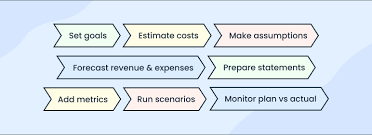
A complete startup booted financial modeling system usually includes the following sections.
Revenue Forecast
This estimates future income based on:
- Product pricing
- Number of customers
- Subscription growth
- Sales trends
Expense Forecast
This tracks all expected business costs, including:
- Salaries
- Marketing
- Hosting
- Tools and software
- Operations
Cash Flow Statement
This shows how cash moves through the business.
It is one of the most important reports for startup survival.
Profit and Loss Statement
This tracks:
- Revenue
- Costs
- Gross profit
- Net profit
Balance Sheet
This shows the company’s financial position, including:
- Assets
- Liabilities
- Equity
Strong financial models combine all three financial statements together for complete visibility.
Important Metrics Every Bootstrapped Startup Should Track
Tracking the right financial metrics helps startups make smarter business decisions and improve long-term cash flow stability. These numbers give founders a clear understanding of business performance, spending patterns, and future growth opportunities.
Without monitoring important startup metrics, businesses can easily overspend, miscalculate growth, or face unexpected cash shortages that slow down operations.
Monthly Recurring Revenue (MRR)
MRR shows predictable monthly income.
It helps founders forecast future cash flow more accurately.
Burn Rate
Burn rate measures how quickly cash is being spent.
Runway
Runway tells founders how many months the business can survive with current cash reserves.
Customer Acquisition Cost (CAC)
CAC shows how much it costs to acquire one customer.
Customer Lifetime Value (LTV)
LTV measures how much revenue a customer generates over time.
Gross Margin
This helps startups understand profitability after direct costs.
These metrics improve decision-making and support healthier financial planning.
Common Mistakes in Startup Booted Financial Modeling
Many startups fail not because the idea is bad, but because their financial planning is unrealistic or incomplete. Good financial modeling should reflect real market behavior, not wishful thinking.
When founders ignore real data and build overly optimistic models, it becomes harder to manage cash flow and make stable business decisions.
Using Unrealistic Revenue Projections
- Many founders overestimate growth.
- Smart financial planning uses conservative assumptions.
Ignoring Cash Timing
- Revenue may arrive late while expenses must be paid immediately.
- Cash timing matters more than projected profit.
Tracking Financials Monthly Instead of Weekly
- Fast-moving startups should monitor cash flow regularly.
- Weekly reviews help identify problems earlier.
Scaling Too Quickly
- Rapid hiring and aggressive marketing can destroy cash flow.
- Bootstrapped startups should scale carefully.
Forgetting Emergency Reserves
- Every startup should maintain a cash reserve for unexpected situations.
Best Practices for Better Cash Flow Planning
Strong cash flow planning is not about complex math, it is about discipline, consistency, and making smart spending decisions at the right time. Bootstrapped startups especially need simple, practical habits that protect cash and support steady growth.
When founders follow proven financial habits, they reduce risk and create a more stable foundation for long-term success.
Keep Operations Lean
Avoid unnecessary expenses during early growth stages.
Charge Customers Early
Revenue validation is important for sustainable growth.
Use Bottom-Up Forecasting
Bottom-up forecasting uses real business drivers instead of random assumptions.
Review Financial Models Regularly
Financial models should evolve with the business.
Focus on Profitability, Not Hype
Healthy businesses survive longer than businesses chasing rapid growth without revenue.
Tools That Help With Startup Financial Modeling
Founders often use tools like:
- Google Sheets
- Microsoft Excel
- QuickBooks
- Xero
- Finmark
- Fuel Finance
However, experienced founders often say the tool matters less than the habit of consistent financial planning.
Why Financial Modeling Builds Investor Confidence
Even bootstrapped startups may seek funding later.
A strong financial model shows investors:
- Financial discipline
- Market understanding
- Revenue logic
- Growth sustainability
Investors trust founders who understand their numbers clearly.
This becomes a major advantage during fundraising discussions.
Final Thoughts
Startup booted financial modeling is not just about spreadsheets. It is about survival, clarity, and smarter decision-making.
When founders understand their cash flow, they make better decisions about:
- Hiring
- Marketing
- Product development
- Pricing
- Expansion
The startups that survive long term are usually not the ones spending the most money. They are the ones managing money wisely.
Strong cash flow planning helps bootstrapped startups stay stable, grow sustainably, and avoid unnecessary financial stress.
If you want to build a startup that lasts, financial modeling should become part of your weekly business routine, not something you only check during problems.

