


Viral marketing strategies seem to work best when one customer ends up bringing in more than one new person. That ratio gets called the viral coefficient and I think when it stays above one the growth kind of compounds without needing extra ad spend.
Nobody can promise a hit though. You can design offers and content that make sharing easy and rewarding and worth talking about but it feels like that part gets a bit messy sometimes. It is kind of important I guess. Some people see it one way and others do not really focus on the same stuff.
Why Most Viral Advice Falls Short
Most guides say to be bold and timely and emotional when trying to get something to spread. That is true enough but it leaves you guessing about the next step. Paula Mantle from Branch sees virality as part strategy and part timing with luck mixed in.
The real goal in any plan is to shrink how much luck you end up needing. You do that by making sharing part of the product or offer right away instead of something you add later. It seems like that loop is what actually matters more than just hoping it happens on its own. I think some people miss how simple that change can be at first.
The Two Numbers Behind Every Viral Campaign
The viral coefficient (K) equals the invites sent by each person, and then multiplied by the percentage of people who take up these invites. Where 5 invites are sent and 20% of people accept these then K will be 5 x 0.20 = 1.0. People then effectively replace themselves. Increasing either parameter will cause exponential growth.
The second figure refers to the time it takes to complete a share cycle. Again, it is speed rather than scale which is most important. With a K factor of 1.2 and 2 day cycle time, the second ‘wave’ of people involved will be around 15 times greater than the original group within 30 days. However, if K is 1.5 but the cycle time is 30 days, the second wave is only 1.5 times greatWith Real Results
1. Put Your Message Inside the Product
Hotmail included a brief call to action in every email that was sent by Hotmail users. It had around 12 million users at the end of 1997, and was acquired by Microsoft that same year. Think about what your customers are already sending, posting or exporting and add a strong brand message to this.
2. Reward Both Sides of the Invite
Both referrer and referred received a bonus. In its first few years Dropbox increased users from around 100,000 to 4 million in 15 months. By giving bonuses to both parties, you double the conversion rate. “half your K number”
3. Turn Customer Data Into a Story
Spotify has a personalised feature called Spotify Wrapped that can then be shared online. Upon Spotify Wrapped’s release in 2025, the platform experienced high levels of engagement with 200 million people using it within 24 hours. This increased to over 500 million shares – a rise of 41% on 2024. Individuals like to share aspects of their personality and so personal features are a good way to do this.
4. Stage a Moment in the Real World
Paramount added ‘smiley’ actors to real life crowds at baseball matches to advertise their horror movie Smile. The movie earned an opening weekend box office takings of $22 million and has received in excess of 160 million natural social media impressions. People love authentic shocks and this is highly filmable.
5. Use Surprise, But Stay Honest
IHOP changed its name to IHOB to promote burgers and gained 1.2 million tweets in 10 days and had 42.6 billion organic impressions. However, due to criticism around the ‘bait and switch’, try to ensure your surprises remain within your brand voice, and give a clear final twist!
6. Start Small and Scrappy
Judy’s Family Cafe built a following with simple phone videos. One clip reached 10.5 million views, and the owner reported a 50% rise in sales. Rough, human videos often feel more trustworthy than polished ads, so test cheap ideas first and spend only on what shows traction.
How to Measure a Viral Campaign
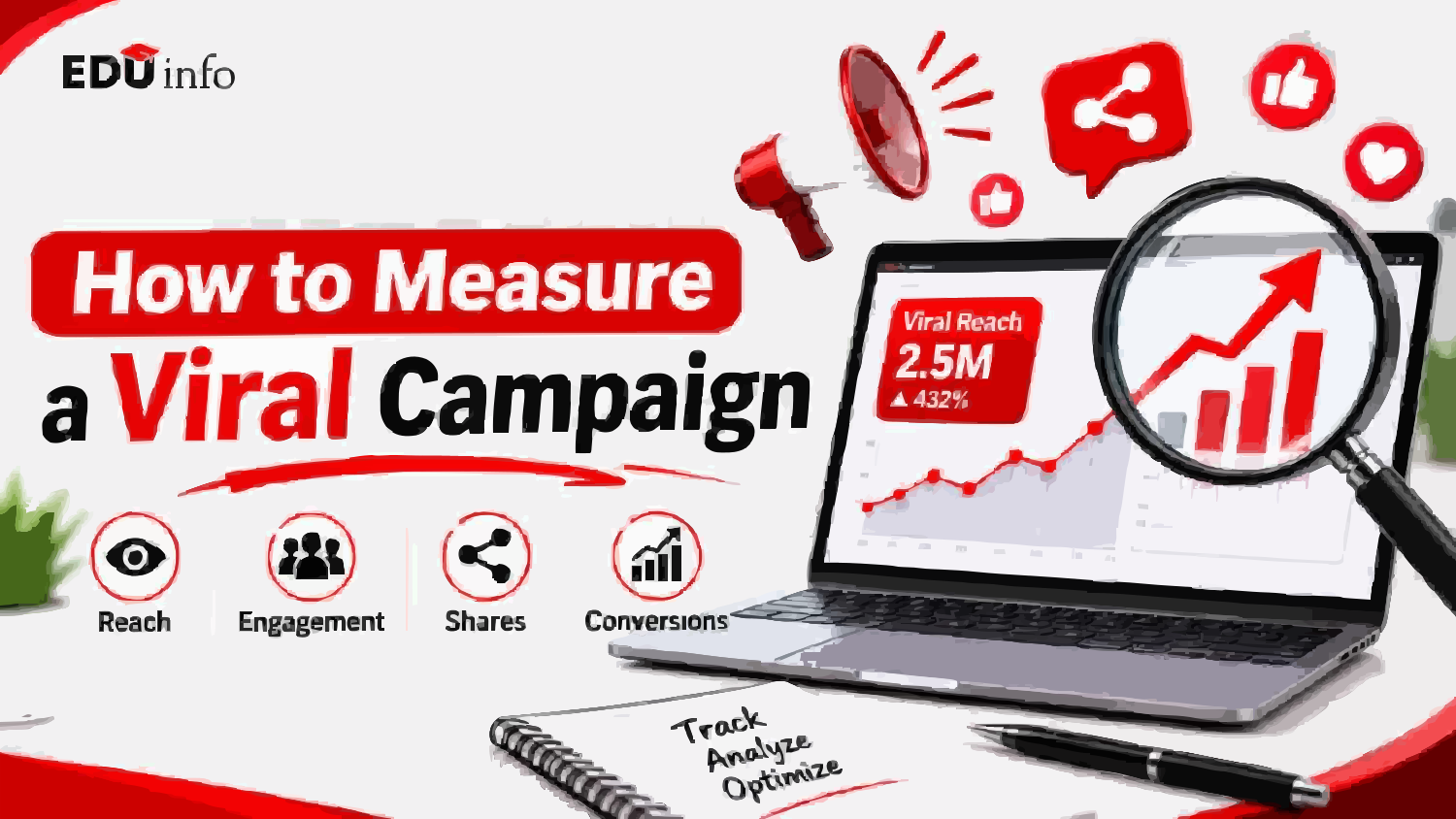
Each week analyse your posts’ virality, loop time, share rate (number of shares/number of views) and referral traffic. Although high reach is impressive, it holds little value if people are not converting. To improve campaign performance, businesses should also focus on conversion rate optimization to turn more visitors into customers. Analyze how your posts perform in relation to your average and continue to utilise the most successful post types.
Mistakes That Hurt Viral Campaigns
Brands can see a drop in engagement if they share humour at in-appropriate times, embed their brand within their material and/or follow trends which are not relevant to them. Optimise your website, customer service and inventory ready for launch. Fast response times to customer comments will also convert browsers into customers.
Frequently Asked Questions
What is viral marketing? Word-of-mouth is where customers promote your business. Unlike advertising, growth is driven by people.
What is a good viral coefficient? Above 1, things will continue to grow organically. Although most products fall under 1, an impressive K factor of 0.4 will reduce the cost of each new customer.
Can a small business go viral without a big budget? Yes. As exemplified by Judy’s Family Cafe, a product, good idea and regular communication can be used to successfully promote to millions of people.
Is going viral guaranteed with the right strategy? However, despite a good strategy, when and how people feel can also affect results.
Your Next Step
Decide upon one strategy to use, establish both a desired K factor and timescale for repetition. This week carry out a trial on a limited group of people. Retain successful methods and disregard unsuccessful ones.
